Publisher: University of California Press
Publication Year: 2010
Japan has done marvelous things with cinema, giving the world the likes of Kurosawa, Mizoguchi, and Ozu. But cinema did not arrive in Japan fully formed at the end of the nineteenth century, nor was it simply adopted into an ages-old culture. Aaron Gerow explores the processes by which film was defined, transformed, and adapted during its first three decades in Japan. He focuses in particular on how one trend in criticism, the Pure Film Movement, changed not only the way films were made, but...
Publisher: Columbia University Press
Publication Year: 2008
Is it true that film in the twentieth century experimented with vision more than any other art form? And what visions did it privilege? In this brilliant book, acclaimed film scholar Francesco Casetti situates the cinematic experience within discourses of twentieth-century modernity. He suggests that film defined a unique gaze, not only because it recorded many of the century’s most important events, but also because it determined the manner in which they were received.
Publisher: Harper Collins
Publication Year: 2008
For twenty-five years Bechdel’s path-breaking Dykes to Watch Out For strip has been collected in award-winning volumes (with a quarter of a million copies in print), syndicated in fifty alternative newspapers, and translated into many languages. Now, at last, The Essential Dykes to Watch Out For gathers a “rich, funny, deep and impossible to put down” (Publishers Weekly) selection from all eleven Dykes volumes. Here too are sixty of the newest strips, never before published in book form.
Publisher: University of Toronto Press
Publication Year: 2007
While the first five decades of the postwar Italian cinematic production furnished relatively little on the subject of the Shoah, recent years have witnessed a surge of Holocaust related films. This study explores the factors behind this development, and provides analyses of works devoted to Fascist anti-Semitism, and the Final Solution for Italy’s Jewish population.
Western Europe, 1970-2005
Publisher: Palgrave Macmillan New York
Publication Year: 2007
In a series of paradigmatic readings of René Girard, Peter Sloterdijk, Michael Haneke, Anselm Kiefer, Michel Houellebecq, Elfriede Jelinek, Giorgio Agamben, Naqvi examines the current fascination with victimhood and the desire for victim status.
Publisher: Harper Collins
Publication Year: 2007
Distant and exacting, Bruce Bechdel was an English teacher and director of the town funeral home, which Alison and her family referred to as the “Fun Home.” It was not until college that Alison, who had recently come out as a lesbian, discovered that her father was also gay. A few weeks after this revelation, he was dead, leaving a legacy of mystery for his daughter to resolve.
In her hands, personal history becomes a work of amazing subtlety and power, written with controlled force and...
Publisher: Indiana University Press
Publication Year: 2001
Edited by Pearl Bowser, Jane Gaines, and Charles Musser
Publisher: Wiley-Blackwell
Publication Year: 2010
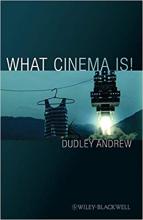
What Cinema Is! offers an engaging answer to Andre Bazin’s famous question through a sweeping look back over the phenomenal ascendancy of a certain “idea of cinema.” Written by one of the foremost film scholars of our time, this provocative volume proclaims cinema’s distinct value not just for the last century but for our current audio-visual culture. Whatever cinema may yet become, this unique “idea” should orient and guide it.
Publisher:
Publication Year:
Lorem ipsum
Publisher: Boydell & Brewer
Publication Year:
White ribbons and black pedagogy – Michael Haneke’s award-winning film The White Ribbon (2009) is a multilayered reflection on purity, ideology, violence, and child rearing. In this tense black-and-white whodunit, mysterious events occur in a small town on the German-Polish border in 1913-14.